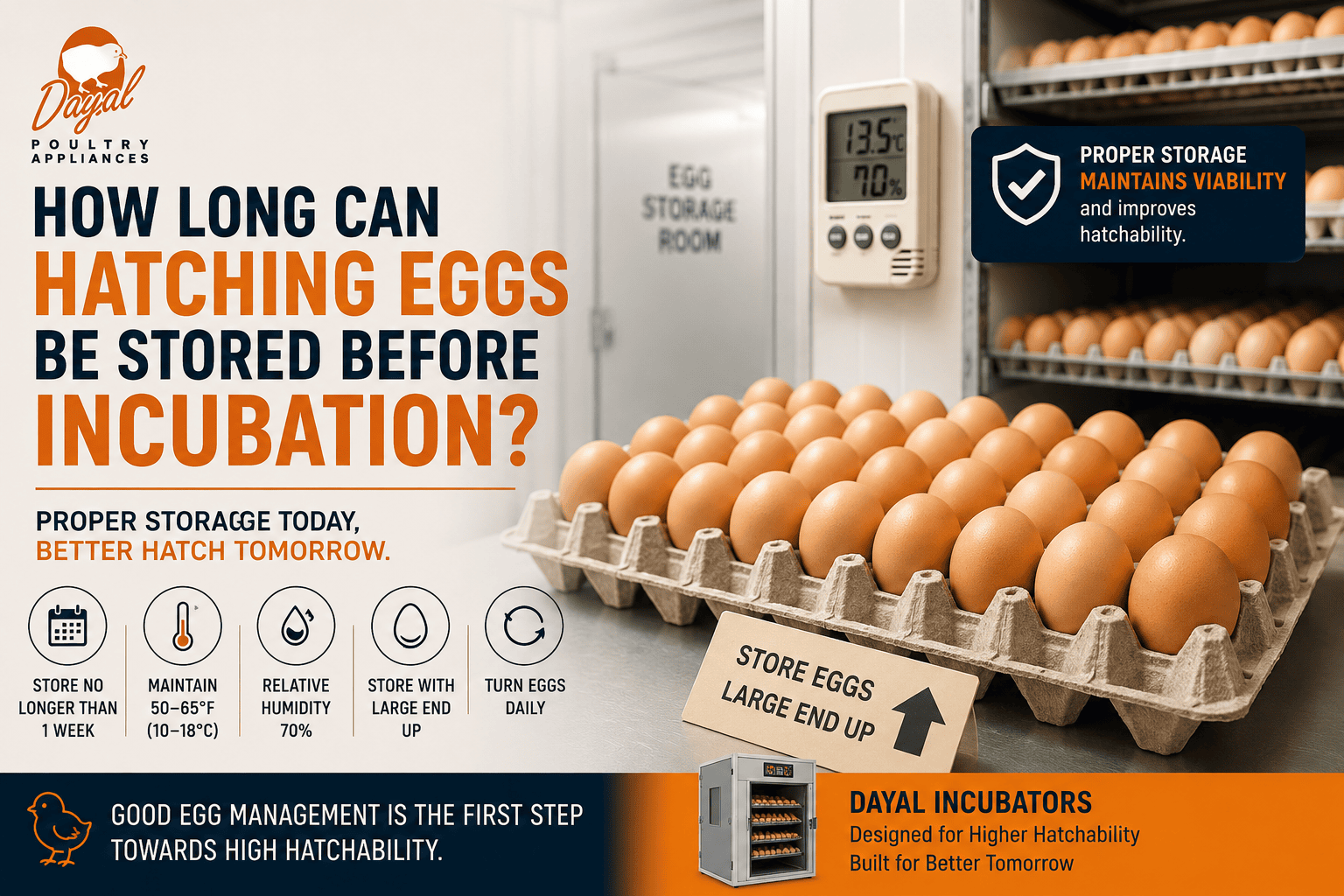
The time between collecting a fertile egg and placing it in an incubator can have a significant effect on hatchability. Proper storage helps maintain embryo viability and reduces unnecessary hatching failures.
For best results, hatching eggs should generally be set within 7 days of collection whenev...
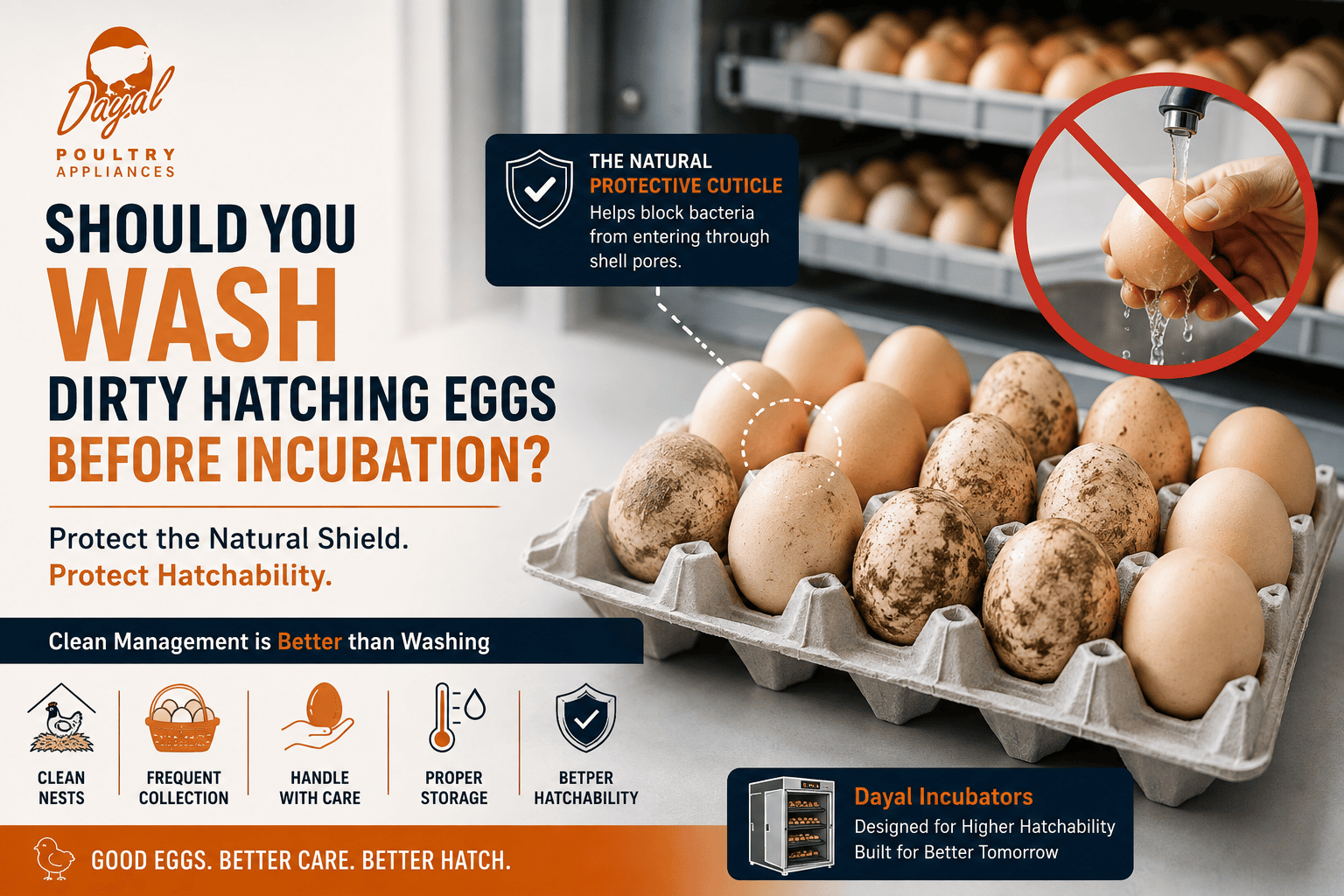
Clean, properly handled hatching eggs are an important part of achieving good hatchability. However, one common question among poultry farmers is: Should dirty hatching eggs be washed before placing them in an incubator?
In general, washing hatching eggs is not recommended. The eggshell has a natura...
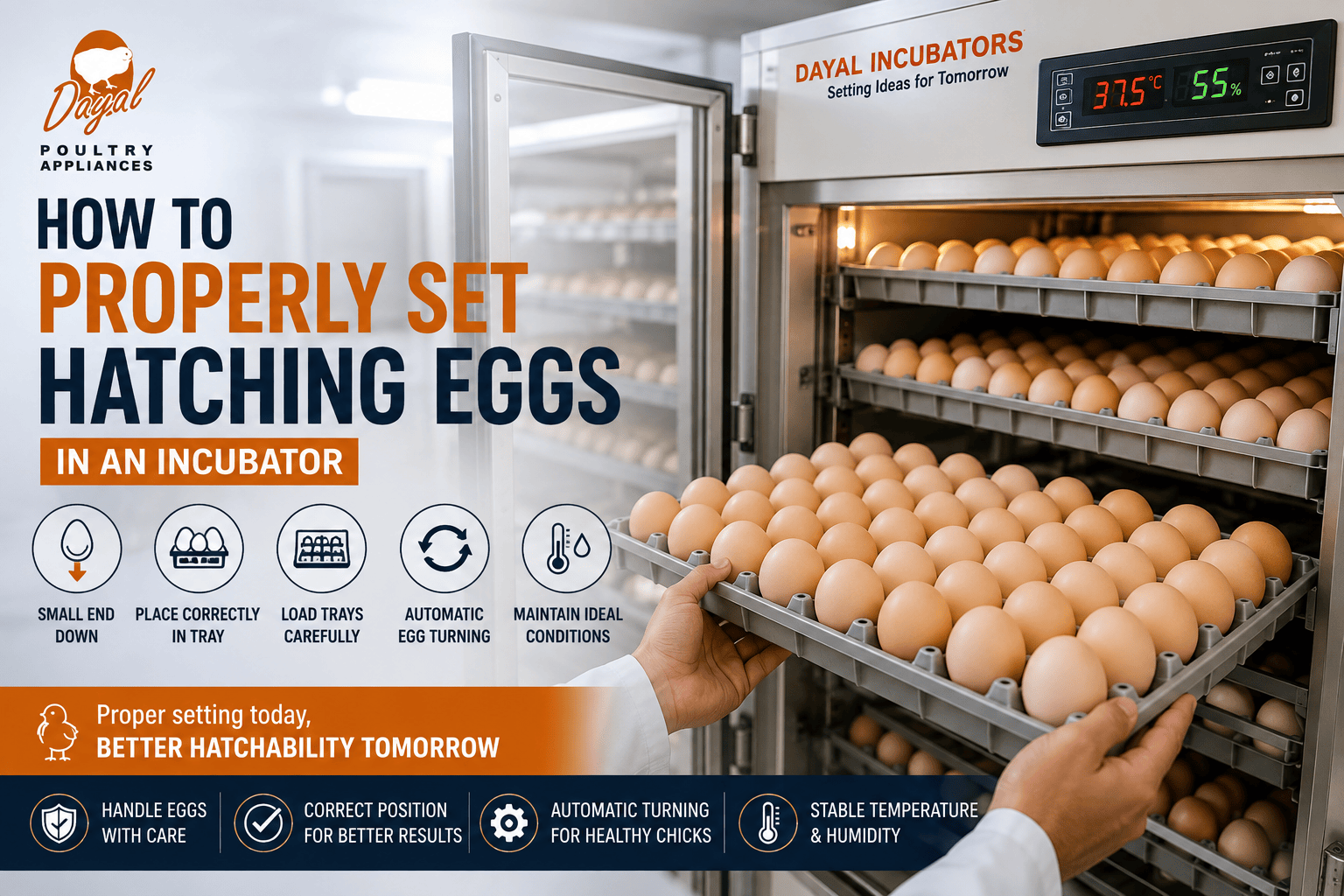
Setting eggs correctly is one of the first and most important steps in successful artificial incubation. Proper handling and positioning of eggs helps maintain embryo development and supports good hatchability.
1. Handle Eggs Carefully
Before setting the eggs, inspect them and select only good-quality...
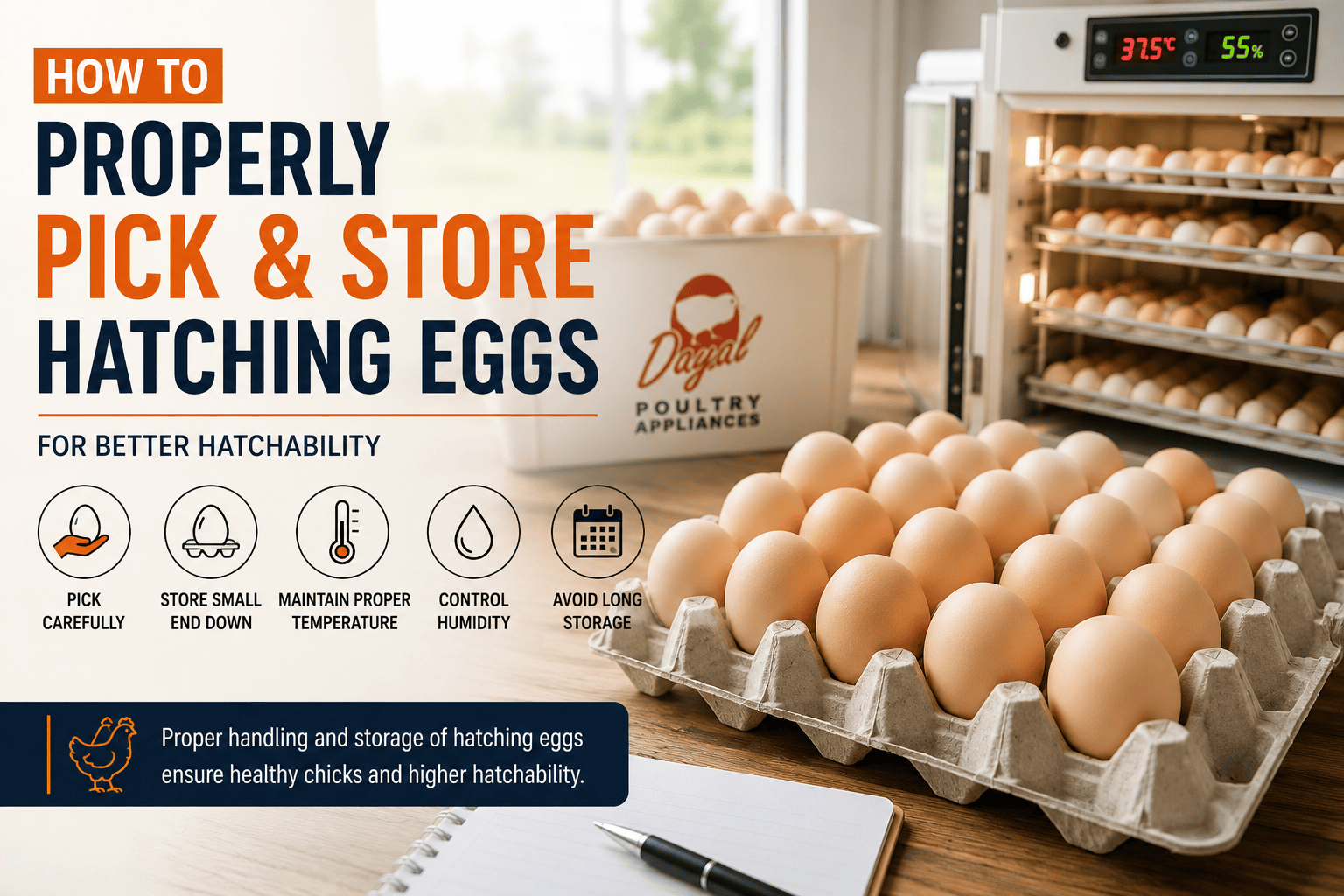
The quality of hatching eggs has a major impact on the success of an incubation program. Even with a high-quality incubator, poor egg collection, handling, or storage can reduce hatchability. Proper handling from the time an egg is collected until it is placed in the incubator helps maintain embryo ...